


Pet Health
Behaviour
6 min read
The 1 Behaviour Most Owners Ignore That Actually Signals Anxiety
It's not aggression. It's not disobedience. It's something far quieter - and almost every pet does it.
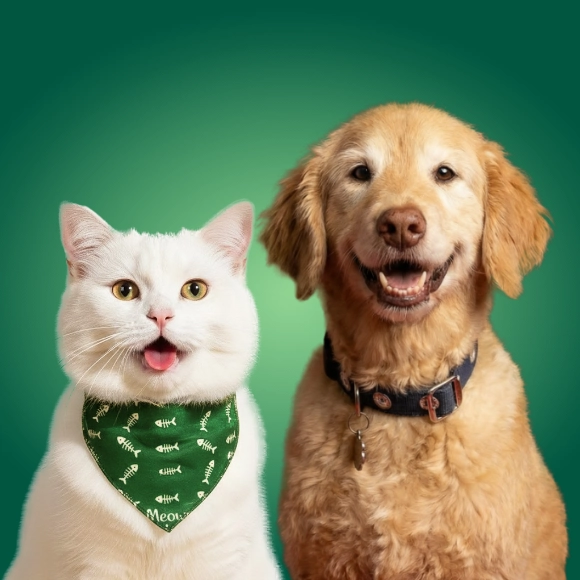
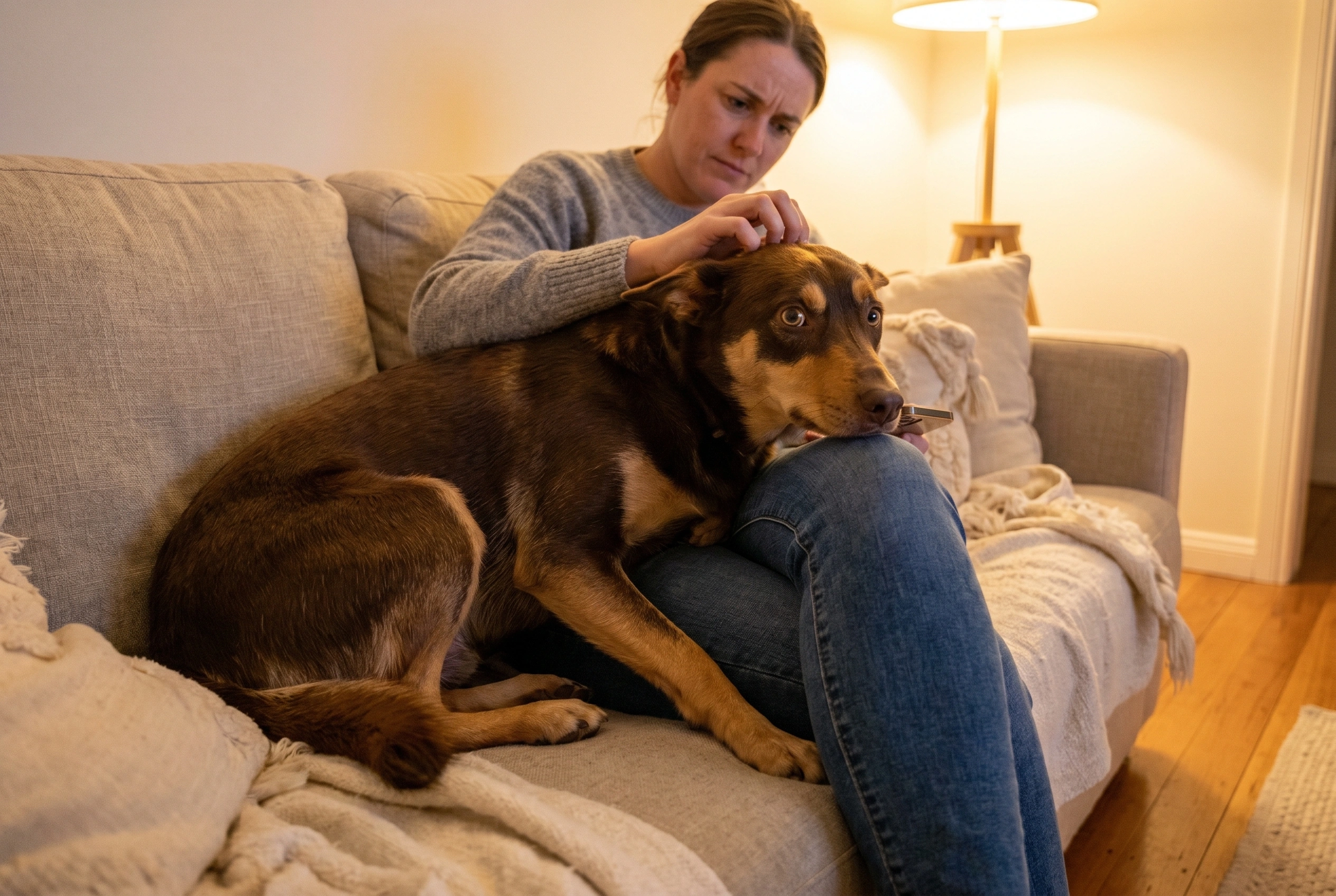
She followed me everywhere.
Into the kitchen. Into the bathroom. If I stood up from the couch, she was already at my feet before I'd taken a step. At night, she'd press herself against my legs so hard I could feel her trembling through the blanket.
I thought it was sweet. I told friends she was "just a velcro dog." That she loved me so much she couldn't stand being apart. People laughed. I laughed.
But then other things started creeping in. The panting when nothing was wrong. The pacing around the house at 2am. The way she'd freeze when someone knocked on the door - not barking, not excited, just... frozen. The yawning when she wasn't tired. The lip-licking when there was no food in sight.
I thought it was sweet. I told friends she was "just a velcro dog." That she loved me so much she couldn't stand being apart. People laughed. I laughed.
But then other things started creeping in. The panting when nothing was wrong. The pacing around the house at 2am. The way she'd freeze when someone knocked on the door - not barking, not excited, just... frozen. The yawning when she wasn't tired. The lip-licking when there was no food in sight.
I kept explaining it away. "She's always been like that." "Some dogs are just anxious." "It's probably the weather."
It took an honest conversation with our vet to hear what I didn't want to hear. My dog wasn't clingy. She was anxious. And she'd been anxious for a long time.
It took an honest conversation with our vet to hear what I didn't want to hear. My dog wasn't clingy. She was anxious. And she'd been anxious for a long time.
The quiet ones suffer longest.
Here's what I didn't understand about anxiety in pets - and what most owners don't either.
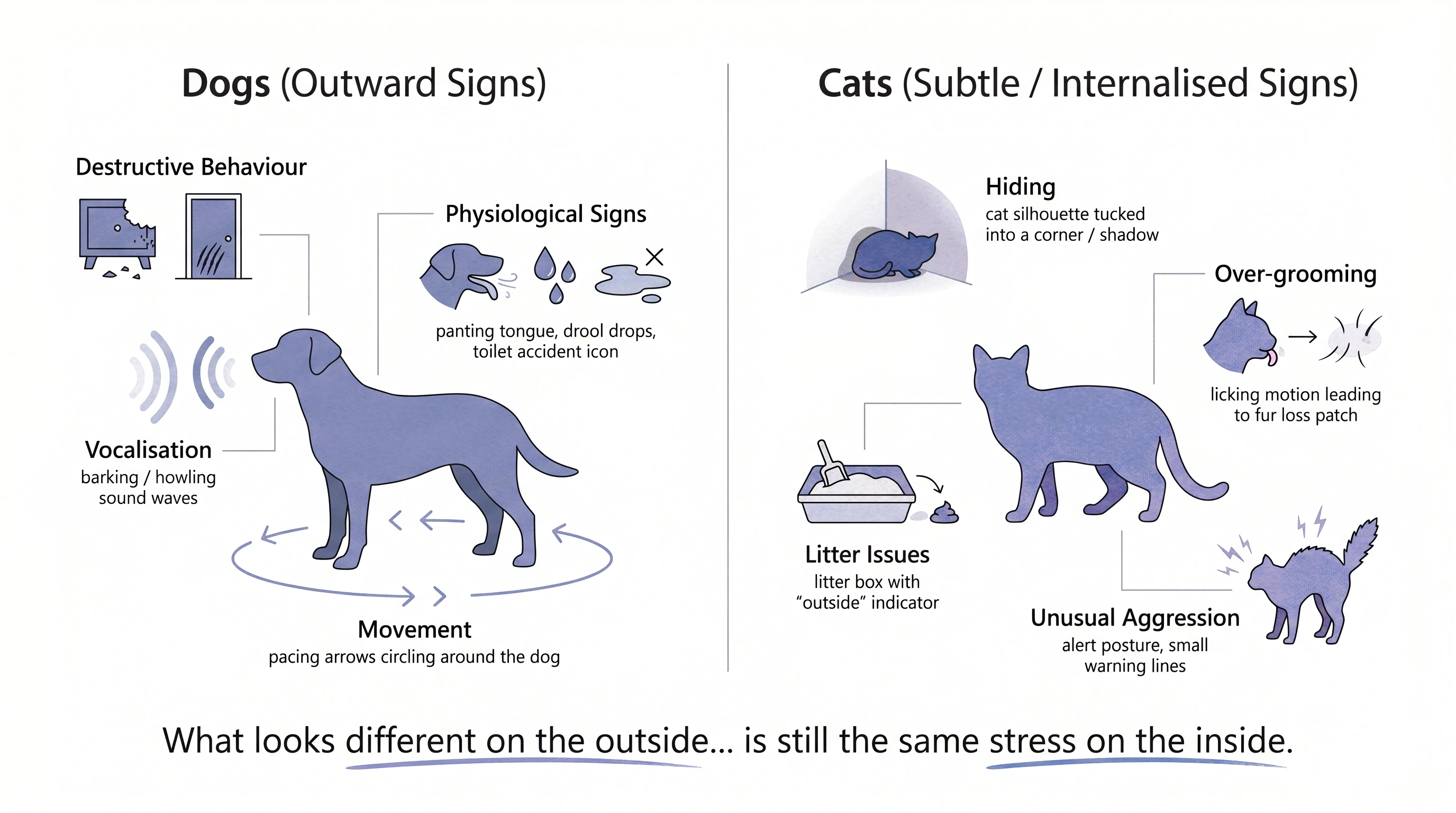
We picture anxious dogs as the ones destroying furniture. Howling when left alone. Digging through doors. The dramatic, unmissable kind.
But that's the end stage. Anxiety starts much quieter than that. And the early signs? They look exactly like personality traits.
We picture anxious dogs as the ones destroying furniture. Howling when left alone. Digging through doors. The dramatic, unmissable kind.
But that's the end stage. Anxiety starts much quieter than that. And the early signs? They look exactly like personality traits.
Following you from room to room
Panting or drooling when there's no heat or exercise
Yawning, lip-licking, or whale eye in calm situations
Reluctance to eat when you're not present
Trembling during storms, fireworks, or car rides
Individually, each of these is easy to dismiss. Together, they form a pattern most owners never connect. Your pet isn't "just like that." They're communicating the only way they can.
And every time we explain it away, the stress builds a little higher.
And every time we explain it away, the stress builds a little higher.
Why it doesn't just go away
When I first accepted that my dog had anxiety, I assumed I could fix it with more exercise, more routine, more cuddles. She just needed to feel safe, right?
I tried longer walks. I tried leaving the radio on. I tried those pheromone plug-ins that promise to create a "calming environment." I even tried ignoring the clingy behaviour, because someone online said I was "reinforcing it."
None of it made a real difference. And there's a reason for that.
Anxiety in pets isn't a behaviour problem. It's a nervous system problem. The behaviour is just the part you can see. Underneath, the nervous system is stuck in a heightened state - producing cortisol and adrenaline as if there's a threat, even when there isn't one.
We call this The Silent Stress Response - a state where your pet's nervous system has learned to stay "on" even when everything around them is calm. It's not that they choose to be anxious. Their body has forgotten how to switch off.
The Silent Stress Response explains why training alone rarely works. You can't train a nervous system out of fight-or-flight. It explains why environmental changes feel like they help for a day or two, then stop. The environment was never the problem. And it explains why your pet seems fine sometimes and then suddenly isn't - the stress isn't gone, it's just below the surface, waiting for a trigger.
I tried longer walks. I tried leaving the radio on. I tried those pheromone plug-ins that promise to create a "calming environment." I even tried ignoring the clingy behaviour, because someone online said I was "reinforcing it."
None of it made a real difference. And there's a reason for that.
Anxiety in pets isn't a behaviour problem. It's a nervous system problem. The behaviour is just the part you can see. Underneath, the nervous system is stuck in a heightened state - producing cortisol and adrenaline as if there's a threat, even when there isn't one.
We call this The Silent Stress Response - a state where your pet's nervous system has learned to stay "on" even when everything around them is calm. It's not that they choose to be anxious. Their body has forgotten how to switch off.
The Silent Stress Response explains why training alone rarely works. You can't train a nervous system out of fight-or-flight. It explains why environmental changes feel like they help for a day or two, then stop. The environment was never the problem. And it explains why your pet seems fine sometimes and then suddenly isn't - the stress isn't gone, it's just below the surface, waiting for a trigger.
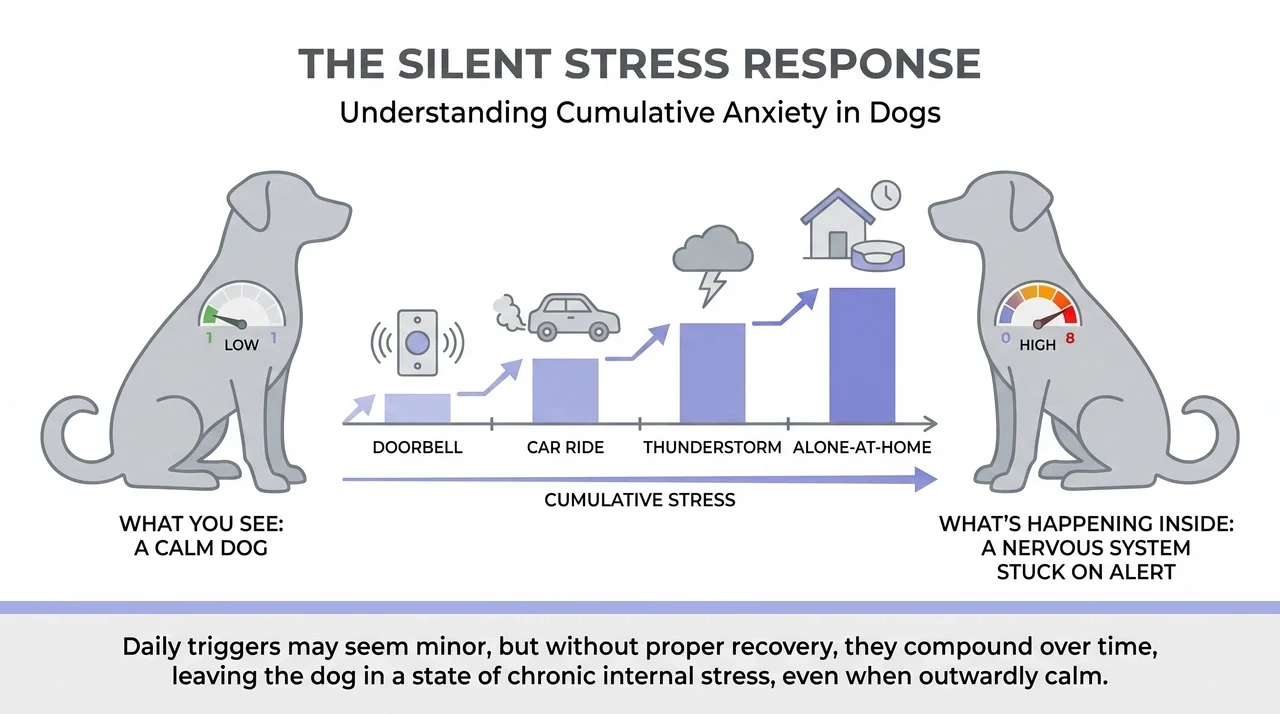
The behaviours you're managing on the outside are symptoms of a system that needs support on the inside.
What their nervous system actually needs
Once I understood The Silent Stress Response, the logic shifted completely. My dog didn't need more walks. She didn't need a different environment. She needed something that could help her nervous system recalibrate - to bring that baseline stress level back down so she could actually respond to the calm world around her.
That means supporting the body's natural calming pathways. Not sedating. Not masking. Actually helping the nervous system find its way back to a regulated state.
This is the critical difference most anxiety "solutions" miss. Pheromone diffusers work on the environment, not the animal. Training works on behaviour, not biology. And heavy sedatives? They knock the whole system down - your pet might be quiet, but they're not calm. They're just too drowsy to show it.
Real calm isn't about switching off. It's about the nervous system remembering how to come back down on its own.
That means supporting the body's natural calming pathways. Not sedating. Not masking. Actually helping the nervous system find its way back to a regulated state.
This is the critical difference most anxiety "solutions" miss. Pheromone diffusers work on the environment, not the animal. Training works on behaviour, not biology. And heavy sedatives? They knock the whole system down - your pet might be quiet, but they're not calm. They're just too drowsy to show it.
Real calm isn't about switching off. It's about the nervous system remembering how to come back down on its own.
What changed everything for us
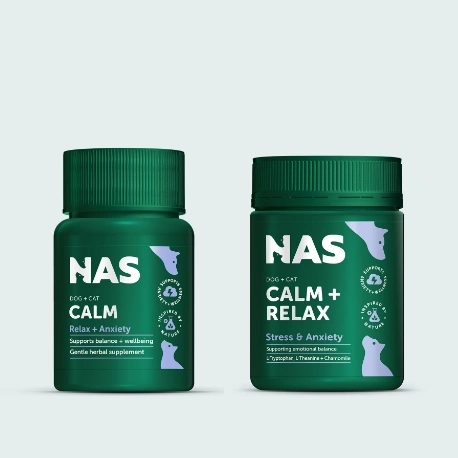
This is why we developed the NAS Calm range - natural formulas designed to support the nervous system's own calming pathways, so your pet can manage stress without sedation or shutdown.
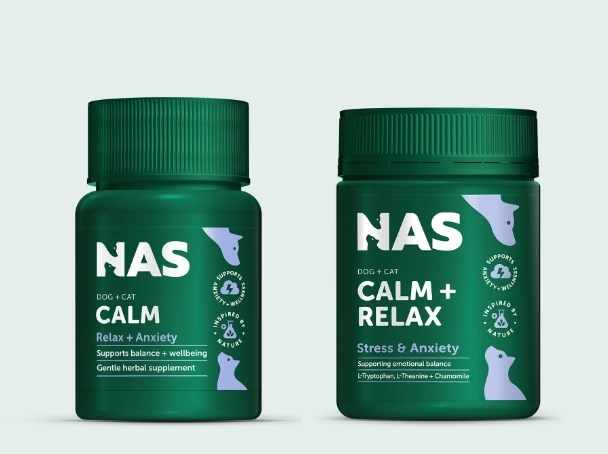
Calm 60S is our fast-acting tablet, formulated with passionflower, L-tryptophan, and B-group vitamins that support serotonin production and nervous system regulation. It's designed for situational stress - storms, vet visits, travel, guests arriving - the moments when The Silent Stress Response spikes and your pet needs support now.
What makes it different from sedatives is what it doesn't do. It doesn't make your pet dopey. It doesn't knock them out. Multiple owners specifically mention this - their dog is calmer, but still themselves. Still alert. Still engaged. Just... not spiralling.
Calm 60S is our fast-acting tablet, formulated with passionflower, L-tryptophan, and B-group vitamins that support serotonin production and nervous system regulation. It's designed for situational stress - storms, vet visits, travel, guests arriving - the moments when The Silent Stress Response spikes and your pet needs support now.
What makes it different from sedatives is what it doesn't do. It doesn't make your pet dopey. It doesn't knock them out. Multiple owners specifically mention this - their dog is calmer, but still themselves. Still alert. Still engaged. Just... not spiralling.
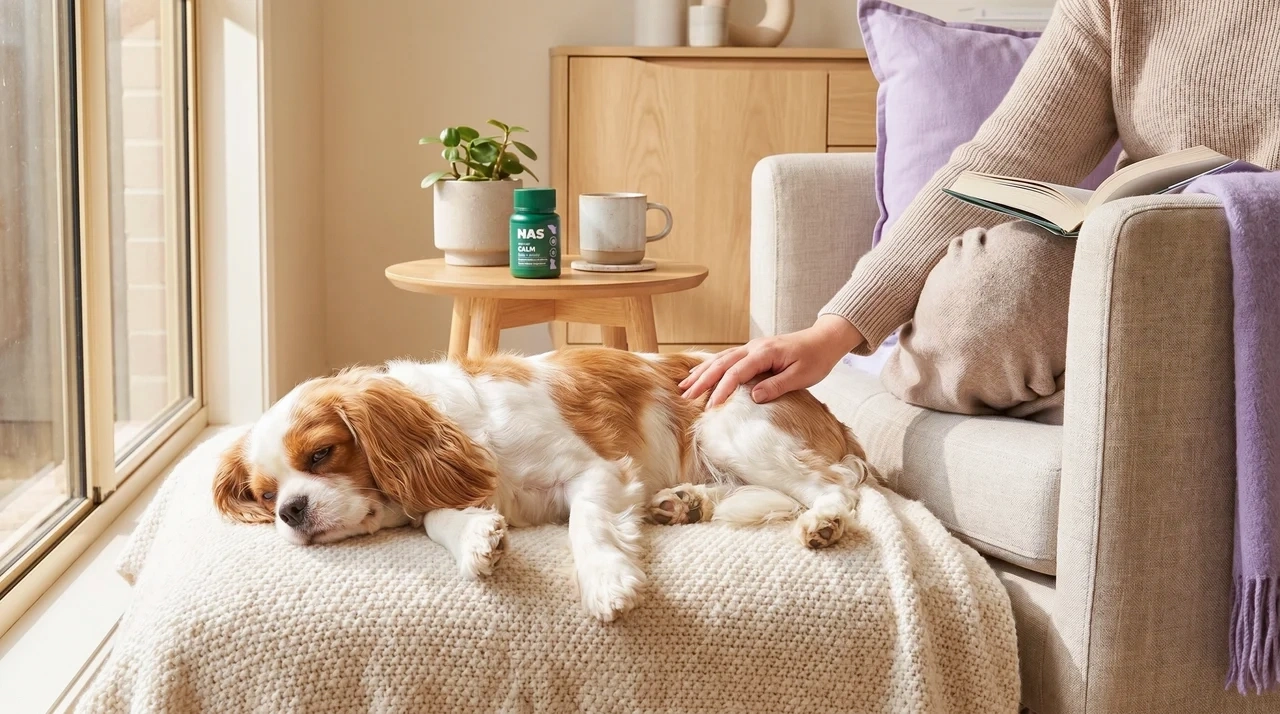
For dogs with deeper, ongoing anxiety - the kind that sits there every day, not just during triggers - we also developed Calm & Relax, a daily powder you sprinkle on food. It works on the same calming pathways but is designed for consistent, cumulative support. Many owners use both together - Calm & Relax as the daily foundation, Calm 60S for acute moments.
We've been developing natural pet health solutions in Australia for over 20 years. Every product in our Calm range is designed to support, not sedate - because your pet deserves to feel genuinely calm, not just chemically quiet.
We've been developing natural pet health solutions in Australia for over 20 years. Every product in our Calm range is designed to support, not sedate - because your pet deserves to feel genuinely calm, not just chemically quiet.
What other owners discovered
It's not aggression. It's not disobedience. It's something far quieter - and almost every pet does it.
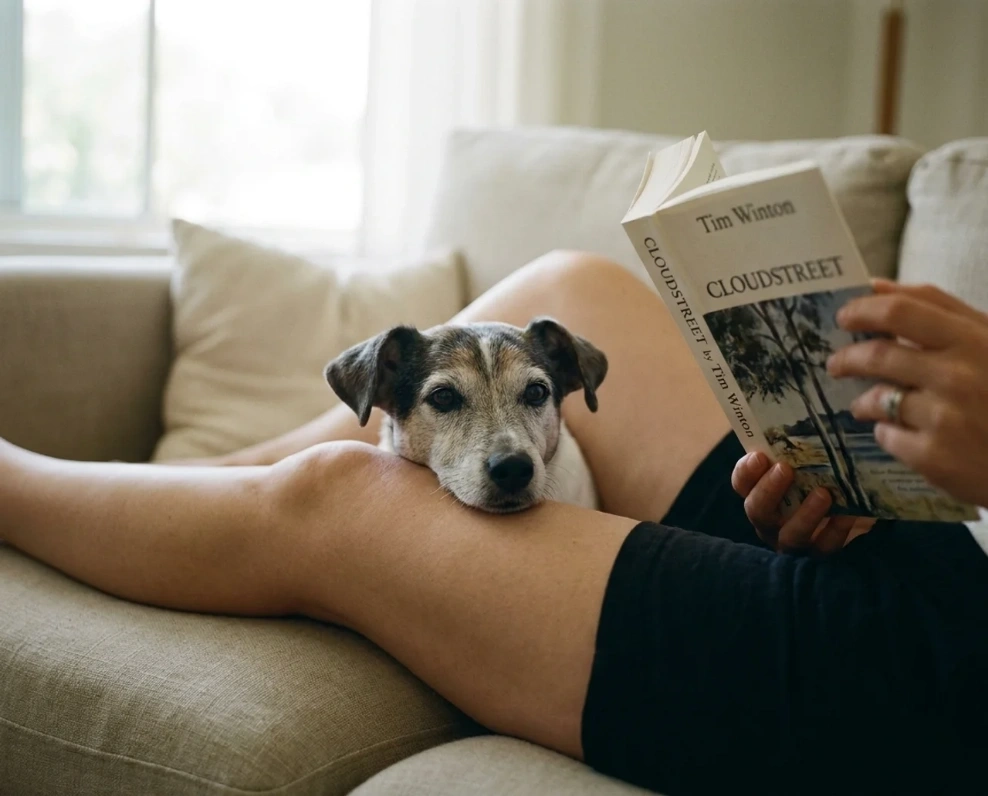
My little man is 18 and he has severe anxiety. NAS calm works fantastically. It doesn't sedate him but it calms his anxiety down. Highly recommend.
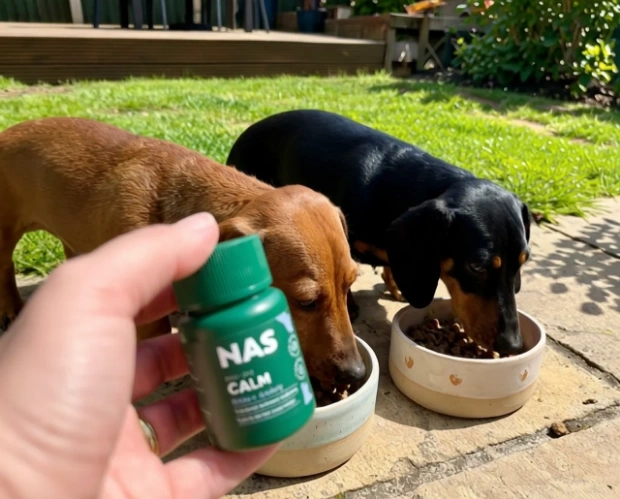
I have two anxious dogs and this has been great for them. After 3 days of using this product they are so so relaxed. Absolutely love it.
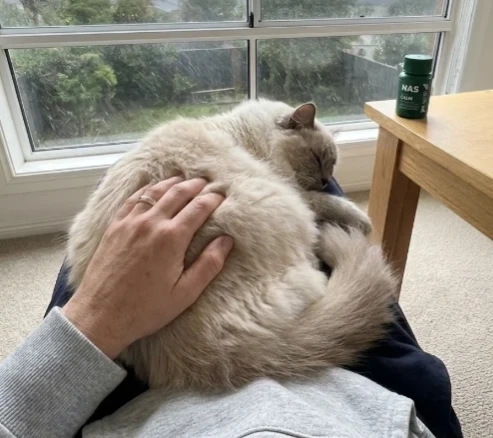
I recently rescued Porshie and we had some storms and she was pretty scared. I used this and it was amazing how it helped calm her. 10/10.
In numbers:
Formulated for dogs and cats of all ages and breeds
10
reviews for Calm 60S + additional reviews across the Calm range
4.5
star average rating
20+
years of natural pet health formulations
Made in Australia
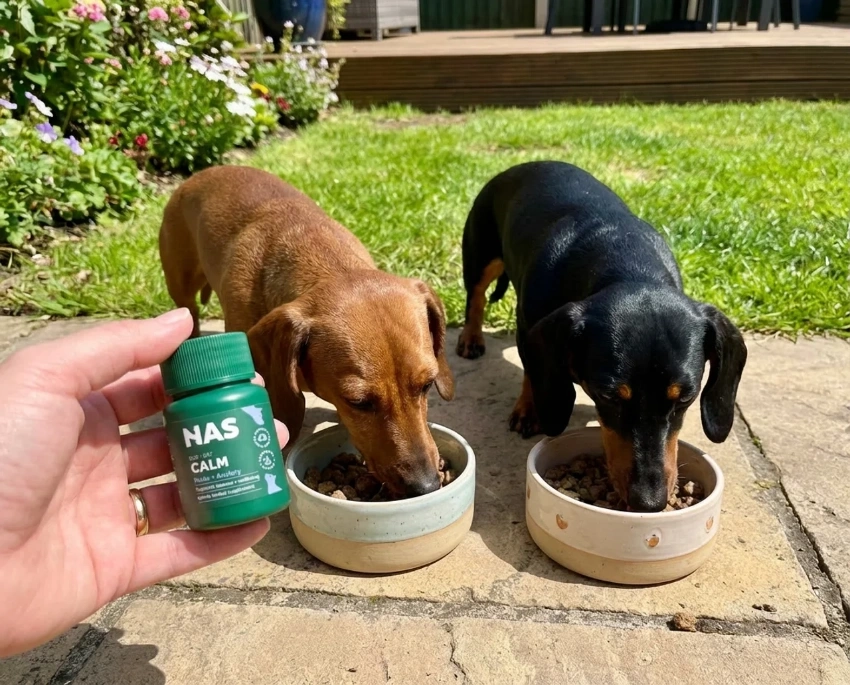
Honest answers
How quickly does it work?
Calm 60S is fast-acting - most owners report visible calming within 30-60 minutes of the first dose. Calm & Relax builds over a few days of consistent use. Diane noticed her dogs were "so so relaxed" after just 3 days.
Calm 60S is fast-acting - most owners report visible calming within 30-60 minutes of the first dose. Calm & Relax builds over a few days of consistent use. Diane noticed her dogs were "so so relaxed" after just 3 days.
Will it sedate my pet?
No. This is the most common concern - and the most common positive feedback. Sharon specifically mentions her dog "doesn't make her dopey." Brea says it "doesn't sedate him but calms his anxiety down." That's exactly the design intent.
No. This is the most common concern - and the most common positive feedback. Sharon specifically mentions her dog "doesn't make her dopey." Brea says it "doesn't sedate him but calms his anxiety down." That's exactly the design intent.
Can I use it for storms and fireworks?
Absolutely. Calm 60S is ideal for situational triggers. Rachelle used it during storms and rated it 10/10. For best results with predictable events, give the tablet 30-60 minutes beforehand.
Absolutely. Calm 60S is ideal for situational triggers. Rachelle used it during storms and rated it 10/10. For best results with predictable events, give the tablet 30-60 minutes beforehand.
Is it safe for older pets?
Yes. Brea's dog is 18 years old and uses Calm with great results. The formula is gentle enough for seniors and suitable for all ages.
Yes. Brea's dog is 18 years old and uses Calm with great results. The formula is gentle enough for seniors and suitable for all ages.
Can I use both Calm products together?
Yes. Many owners use Calm & Relax daily as a baseline, and add Calm 60S for acute stress events. They work on the same pathways and complement each other.
Yes. Many owners use Calm & Relax daily as a baseline, and add Calm 60S for acute stress events. They work on the same pathways and complement each other.
Calm isn't something you train into them
The Silent Stress Response doesn't break on its own. You can't exercise it out. You can't love it away. And you definitely can't ignore it into submission.
But you can support the nervous system that's driving it. One tablet for the tough moments. One daily scoop for the everyday baseline. That's all it takes to give your pet's body the support it needs to find its way back to genuine calm.
Within days, you'll start to see it. Less pacing. Less panting. Less freezing at the door. A pet that can actually settle - not because they're exhausted, but because they finally feel safe enough to.
But you can support the nervous system that's driving it. One tablet for the tough moments. One daily scoop for the everyday baseline. That's all it takes to give your pet's body the support it needs to find its way back to genuine calm.
Within days, you'll start to see it. Less pacing. Less panting. Less freezing at the door. A pet that can actually settle - not because they're exhausted, but because they finally feel safe enough to.
It wasn't "I just love you too much"
Stock Is LOW
Your pet has been trying to tell you something
See If NAS Calm Is Right For Your Pet
Non-sedating calming support
Fast-acting tablet + daily powder
Vet-approved. Lab-verified. Pet-loved
Australian owned and made since 2005
The pacing slows. The panting stops. The trembling eases. And for the first time in a long time, your pet exhales. Really exhales.
That's not sedation. That's calm. Naturally.
That's not sedation. That's calm. Naturally.
THIS IS AN ADVERTISEMENT AND NOT AN ACTUAL NEWS ARTICLE, BLOG, OR CONSUMER PROTECTION UPDATE
Photographs of persons used on this page are models and used for illustrative purposes only.
Natural Animal Solutions (NAS) | Australian Owned & Operated | Est. 2005
Results may vary. Individual experiences described in reviews are personal to those customers and do not guarantee identical outcomes. Always consult your veterinarian for specific behavioural or anxiety concerns.
Photographs of persons used on this page are models and used for illustrative purposes only.
Natural Animal Solutions (NAS) | Australian Owned & Operated | Est. 2005
Results may vary. Individual experiences described in reviews are personal to those customers and do not guarantee identical outcomes. Always consult your veterinarian for specific behavioural or anxiety concerns.